• Skip to primary navigation
  • Skip to main content
  • Skip to primary sidebar

Crushing Krisis

Comic Books, Drag Race, & Life in New Zealand

  • DC Guides
    • DC Events
    • DC New 52
    • DC Rebirth
    • Batman Guide
    • The Sandman Universe
  • Marvel Guides
    • Marvel Events
    • Captain America Guide
    • Iron Man Guide
    • Spider-Man Guide (1963-2018)
    • Spider-Man Guide (2018-Present)
    • Thor Guide
    • X-Men Reading Order
  • Indie & Licensed Comics
    • Spawn
    • Star Wars Guide
      • Expanded Universe Comics (2015 – present)
      • Legends Comics (1977 – 2014)
    • Valiant Guides
  • Drag
    • Canada’s Drag Race
    • Drag Race Belgique
    • Drag Race Down Under
    • Drag Race Sverige (Sweden)
    • Drag Race France
    • Drag Race Philippines
    • Dragula
    • RuPaul’s Drag Race
    • RuPaul’s Drag Race All Stars
  • Contact!

essays

Personal essays from Krisis on everything from parenting to immigrant life to driving, and much more.

Fandom, sources, subjective truth, and the Lee/Kirby X-Men Omnibus variant cover

August 28, 2016 by krisis

I won’t bury the lede: the variant edition of the Stan Lee / Jack Kirby classic X-Men Omnibus, Vol. 1 is the Kirby cover.
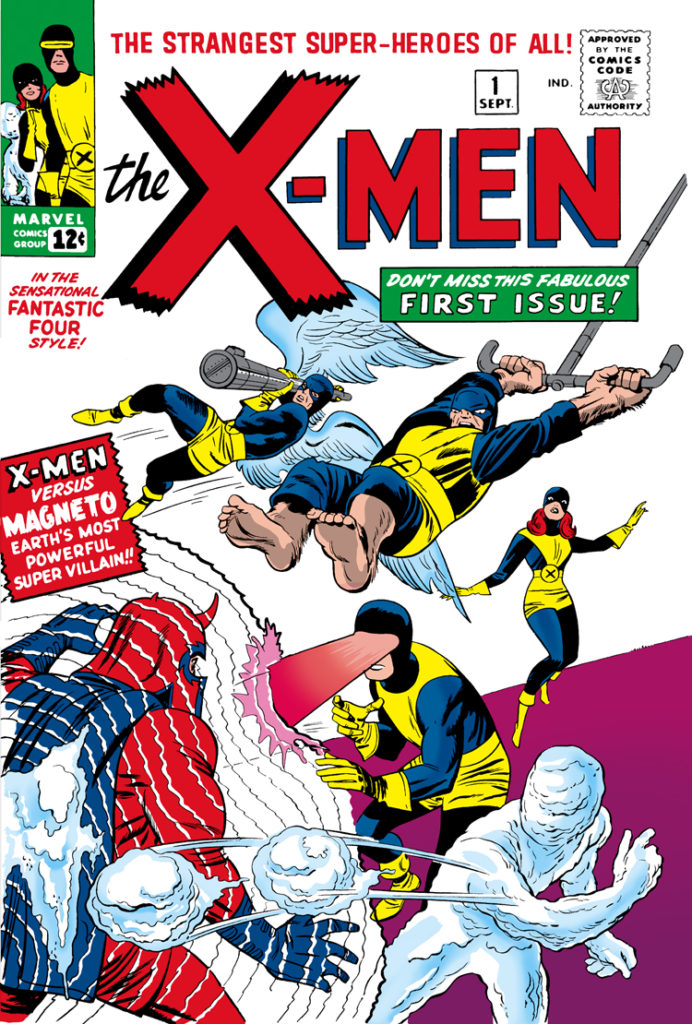
X-Men Omnibus Vol. 1 by Lee Kirby variant kirby classic cover

This is the variant cover. Don’t trust me – read the third section of this post for proof.

By the way, that was the answer to life, the universe, and everything. It’s turns out it’s not 42 – it’s that the X-Men Omnibus, Vol. 1 direct market variant is the Kirby cover.

How and why I’m making a blog post to answer that question is more interesting than the question or the answer.

When it comes to fandom on the internet, it’s assumed that everyone is working from the same primary source – the material they’re all fanning over.

Since everyone is consuming the same thing, deliberate misinformation would be obvious. Thus, information doesn’t tend to be questioned as it spreads across hundreds of blogs, wikis, lyric sites, comic databases, etc – and, none of those sites ever state their sources, because the source is assumed to be the actual material.

There is a problem with that assumption. Sometimes the source is the material, but sometimes it’s just the whisper down the lane from other secondary sources. Sometimes the source is the material, but it’s being interpreted incorrectly.

There is a lot of room for error without any malicious intent to spread disinformation, and without even the tacit citations of Wikipedia you’ll ever know the providence of the information you’re consuming. Due to ouroboros-like nature of the internet, one slight discrepancy introduced into the system will make the rounds, continuing a feedback loop until a little piece of misinformation swells to prohibitive truth – determining the outcome of arguments and dictating the sale price for rare memorabilia.

Fans like to pretend they’re experts, but a lot of times they’re just another parroting back the feedback. I’ve encountered three examples in the past week, and even with my pseudo-scholarly approach to being a fan I managed to be the parrot one time.

What happens when one of these pieces of information actually matters and the echo chamber is the only possible source? You don’t have to look far to find out – it happens every day. News networks pick up parody articles as truth! People cite statistics that aren’t real! The AP makes up tons of stuff and people take it at face value because, you know, AP. And those are journalists.

It makes me worry that as we put more of our consciousnesses and knowledge into the vast matrix of the internet, the concept of “truth” is becoming increasingly subjective.

Fair warning: the first section of below uses a sometimes derogatory word for vagina twice in the context of quotes about the lyrics to a song. We should not be afraid of words, only what people mean by them. Say it sometime. [Read more…] about Fandom, sources, subjective truth, and the Lee/Kirby X-Men Omnibus variant cover

Filed Under: comic books, essays Tagged With: Amanda Palmer, Collected Editions, Dresden Dolls, Jack Kirby, X-Men

Design vs Experience (or: when digital maps rule our physical world)

July 9, 2016 by krisis

EV refers to the voice of Google Maps as, “The Map Lady,” and sometimes The Map Lady and I have a disagreement.

Case and point: to get to the zoo from my house, The Map Lady has me turn off of what is effectively the suburban version of Market Street to get onto Chestnut Street – which makes total sense – but then has me turn off of three-laned Chestnut almost a mile before a crucial left turn to return to sluggish one-laned Market.

On those occasions, I turn to EV during a stop at a red light and say, “The map lady is very confused, today.”

A stone walkway into a larger plaza is partially obstructed by a large stone sphere; walkers have worn their own path around it in the nearby grass.

User Design versus User Experience, one of my favorite visual analogies from my time in start-up land. (Walkers have elected to cut through the grass rather than round the corner and walk on the pavers.) Photo by felixphs

Is she really? Computerized directions aren’t about a route that’s seemingly more direct or that has a higher speed limit. They’re taking into account a quantity and quality of factors that never occur to we humans as navigators … or even to the city planners who designed the streets in the first place!

Even though I call her confused, The Map Lady has found ingenious short-cuts to get me around Delaware County, like skipping a long chain of turn-only lights by cutting a three-quarter circle through a neighborhood with stop signs.

This amplifies the typical tension between User Design vs User Experience not only because of the sheer magnitude users, but also because the reality of their actions can transform the landscape itself.

This was exemplified for me by an article last month in Washington Post, “Traffic-weary homeowners and Waze are at war, again. Guess who’s winning?” A residential suburban neighborhood suddenly became a busy thoroughfare due to its status as a slightly more-efficient detour to construction than the route that was officially marked. Understandably, home owners who wanted to live in a quiet area aren’t too pleased with the increased traffic and noise.

While commenters castigated the home owners’ sense of entitlement (streets are public, after all), I couldn’t help but sympathize with them. I’ve only once lived on a block I’d consider a “thru-street” that delivered regular traffic from one destination to another. I find the noise distracting to everything I do, from recording to sleeping. When we bought this house, part of the search criteria was to find a street that more or less lead nowhere in an enclosed neighborhood. (Not a development; just a neighborhood that has no single street that starts on one side and continues out the other.)

Yet, during recent construction, SEPTA busses were detoured through the street perpendicular to ours; it was the only north-to-south way to avoid the construction for a mile in either direction. I was aghast – I had never in a million years assumed we’d be living adjacent to a bus route. Luckily, the change lasted on a few days. Had it been longer, I would have been legitimately agitating to move.

I ponder these things as The Map Lady steers me through previously unexplored territory to get to familiar places. She’s doing more than getting me there faster, or annoying another solitude-loving homeowner: she’s changing my use of physical infrastructure.

Is a tiny residential street built to handle occasional traffic able to endure the volume of “a vehicle every two seconds,” as was the case in that WaPo article? Are the driveways designed so that residents may safely exit into “a backup dozens of cars deep”? Should parking rules be changed, permits issued, stop signs turned to lights, or dotted or solid lines added to the road faces? The innards of historical cities like Philadelphia and Boston have long since wrestled with these dilemmas, but computerized mapping has made them relevant to every street in the country.

The rule of digital cartography can have impacts beyond rerouting traffic. Fusion details how a digital mapping company called MaxMind’s act of assigning unplaced IP addresses to the geographic center of the United States made life a nightmare for renters at an isolated Kansas farm. These people made absolute certain their street wouldn’t be mistakenly re-purposed as a thoroughfare when they rented their house, but didn’t plan for the ire of scores of scammed internet users landing on their front lawn – or for their personal information to be shared across the internet in misplaced retaliation.

Alternately, perhaps you live in a converted church and have suddenly discovered you are a Pokemon Gym courtesy of augmented reality game designer Niantic:

Living in an old church means many things. Today it means my house is a Pokémon Go gym. This should be fascinating.

— Boon Sheridan (@boonerang) July 9, 2016

This is what I’m a little leery of. People pulled up, blocking my drive way as they sit on their phones. pic.twitter.com/WpRbilk6g6

— Boon Sheridan (@boonerang) July 10, 2016

In all three of these examples – Waze, MaxMind, and Niantic – the affected residents were none the wiser of their property’s sudden change in status until they began to suffer the deleterious effects of the situation via the behavior of others. Worse, none of the three have an obvious avenue to protest their designation – Waze, by its nature, is crowdsourced and behaving as expected; it took inquiries from Fusion’s writer Kashmir Hill for MaxMind to make a change after a decade of ignorance to the problems they were causing; so far, Niantic offers no publicized process for property owners to opt out of their Pokémon Go mapping.

That is terrifying. The nature of our connected world is allowing private companies to effectively create their own geolocated “watch lists” that may soon begin to affect property values or put lives at risk without even the basic requirement of an appeals process.

Also, note the aspect of privilege associated with these three cases. The Waze neighborhood waged war through the app and were covered by the Washington Post. The Pokémon Church Guy immediately caught on and his good-natured response turned his plight into massive Twitter exposure.

What about the residents of the Kansas farm? They arguably experienced the worst harm, “visited by FBI agents, federal marshals, IRS collectors, ambulances searching for suicidal veterans, and police officers searching for runaway children,” and having their personal details spewed across the internet in a series of doxxings. Until Ms. Hill found them all they got was a sign posted in their yard by the sheriff that said to leave them alone and call him with questions.

I won’t re-invade that shared personal information to find out their personal demographics, but even if they’re a third white male in this example the demographics of their location (and of the property’s owner, and 82 year old woman) combined with the length of their suffering speaks volumes.

Digital cartography is no longer simply describing or annotating our physical world – it’s having a reciprocal impact that is invisible until it’s unavoidable – and, even when it is unavoidable, its true nature is frequently gated by the technological access and savvy of the afflicted.

For me, that begs the question of which geography represents the truth – the one we can experience solely through the physical, tangible world, or the one that is exclusively digitally accessible? As with history, I think the truth will be determined by the victors, and in many cases that won’t be the unsuspecting residents like the people living in one of the houses in this story.

Filed Under: essays Tagged With: cartography, maps, Niantic, Pokemon, Pokemon Go, reality, Washington Post, Waze

protagonists, plot armor, and diversity in fiction

July 8, 2016 by krisis

There is no question in my mind that diversity of representation in fiction is important, and not just because EV naturally gravitated towards female heroes as a baby.

The media we consume helps to construct the reality we assume, which is highlighted by one of my favorite communication theories, Cultivation Theory. It’s a pretty obvious theory at its root – if all we see on the news are stories about muggings and murders, we assume the world around us is disproportionally unsafe. We cultivate our perceived reality from the media we consume.

Similarly, I think if we consume fictional worlds where we see ourselves reflected we are emboldened, and when they are filled with people different than ourselves, we come to hope and expect our lives will be filled with those people, too.

MAvgV02 - 0001 epting variant promo

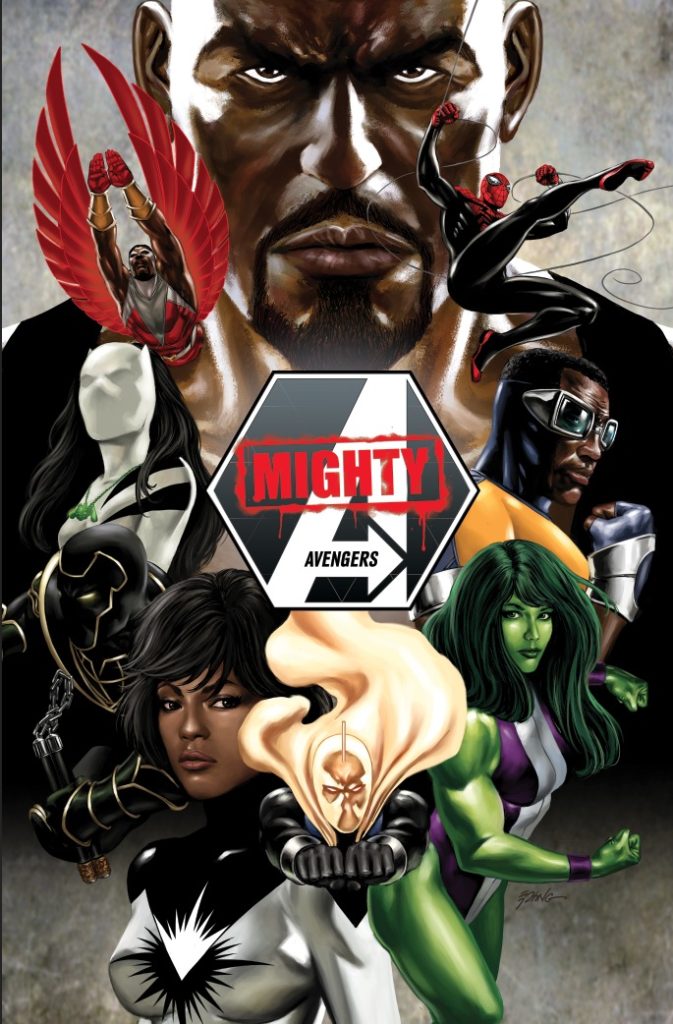
Marvel relaunched Mighty Avengers in 2014 as a majority POC team of Avengers. Art by Steve Epting.

That means all representation is good representation, like Riri Williams as Iron Man, but having a diverse cast is just step one of a truly representative fictional world. Step two is how you treat those characters and who among them gets to be the protagonist.

One of the challenging aspects of being the author to construct those worlds is putting your cast of diverse characters into perilous situations. For a story to be thrilling – especially a story serialized in the long term – we have to believe that characters are truly in danger.

This is part of what makes an auteur like Joss Whedon so compelling (and so maddening): with him, everyone is in danger, all of the time. There is no status quo. Of course, comic books embrace this concept wholeheartedly –  nothing thrills them like making the transgressive choice of killing the seemingly unkillable (only to bring them back to life later). It’s no coincidence Whedon was a comic fan before he was famous (he’s said many times Buffy was based on the template of Kitty Pryde).

(I don’t mean to deify Whedon, as he has his weaknesses from the critical lenses of feminism or queer theory (the two I feel somewhat qualified to speak to), but he is easily the best mainstream male creator to use as an example here – and not just for his visibility. The fact of the matter is, he’s willing to kill popular white guys and let women win. That’s a start.)

Is killing more characters more often the best method of making a story with a diverse cast more thrilling? Not really, because that doesn’t fully recognize the problem of protagonists and plot armor, among other reasons.

The protagonist of a serialized story tends to wear some unavoidable amount of plot armor – a form of extra-fictional protection derived from the fact that we know they will be in the commercial for the next installment. They might be injured or tortured, or even killed in the long run, but they don’t tend to die in random, unhyped episode.

(Many forms of episodic fiction use this to their advantage, setting up a fake set of protagonists to off shockingly early. I can only think of one that legitimately killed main characters left and right at all times: Spooks AKA MI:5 from BBC. Be warned – you are going to be upset when you watch it.)

To make the world around the protagonist seem like it has some amount of stakes, it is the supporting cast who must go without plot armor to be placed in peril. Thus, if the only diversity in your fictional world is in the supporting cast, then your diversity tends to be expendable. If they aren’t, it feels like they are also are wearing “plot armor,” and now your fiction has no consequences.

The unfortunate result of this is that the people who need to see themselves represented more in heroic fiction – people who are black, indigenous, Asian, LGBT, female, disabled, and on – also wind up seeing themselves maimed and killed to make their protagonists feel something and to give their world the illusion of danger.

(The disposal of supporting female characters to make male protagonists feel was deemed “fridging” or “Women in Refrigerators” by then-critic/now-author Gail Simone. At this point, “fridging” is a more generalized term applied to the suffering of any (typically minority) character in order to create a reaction in the (typical male) protagonist.)

There’s a deeper vein being tapped here than simply the expectation that these characters will be endangered. There is also the risk that readers begin to see those grim fates as inextricably tied with their identities. A great example that isn’t tied exclusively to identity is the horror movie trope that the girl who has sex is sure to die. The implication (sometimes intentional, sometimes not) is that sex is sinful and it makes you narratively expendable (or, worse, a target for violence).

YAvgV02 - 0013 promo

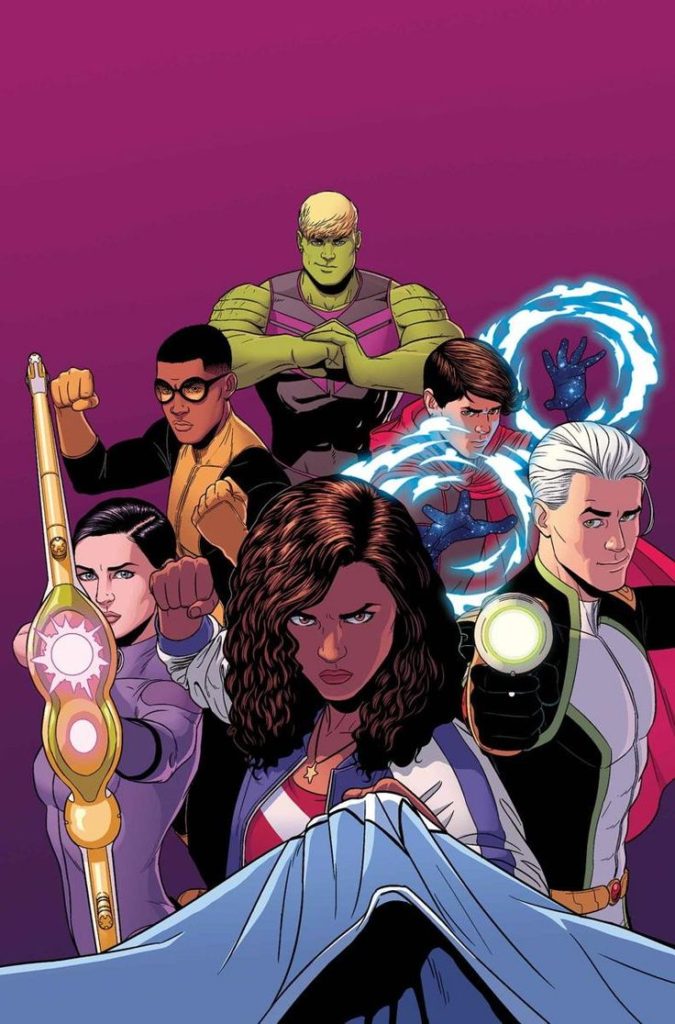
In 2013, Kieron Gillen and Jamie McKelvie launched a Young Avengers team that turned out to be all-minority and ALL QUEER. Wow. Art by McKelvie.

What is the implication when the gay friend or the black friend always dies? When a reader who identifies that way sees themselves being killed again and again in the media they consume, what reality do they begin to cultivate?

Do they believe their life matters?

Author Kieron Gillen recently addressed this in a response to a reader question on Tumblr; here’s an excerpt:

Reader: I (queer myself) understand an issue with such a lack of proper representation/appreciation for queer characters, especially with the recent discussions of queer deaths in media. Yet with WicDiv I see all characters as equally cared for, even in death. Just curious on your thoughts?

KG: There’s certainly been people who’ve found it upsetting and stopped reading the book for it, which we understand entirely. At least part of the reason our story front loads the “All these people are going to die” is that we want to put our cards on the table. … [I]n culture, we are so used to seeing bad things happen to LGBT characters because they are LGBT, that we can read negative intent into stories where bad things happen to them despite that they they are LGBT. I suspect she’s right.

(Like Whedon, Gillen’s approach works within the context of his stories – they’re typically stories about fear and loss where anyone might suffer a terrible fate, and he telegraphs that at the start. Also, not every one of his stories is one of loss – his brilliant Young Avengers is a mainstream book with the most diverse group of characters I’ve read in years and it doesn’t end in misery.)

Just as the solution to making a story thrilling isn’t constantly killing characters, the solution to the issue of increasing positive diverse representation cannot be plot armor for every minority character that walks into the story. That’s both patronizing and predictable. There is no good fiction without risk. To again reference the familiar horror trope, just as it’s no fun (and: awful) to know that the virgin will always live to see the end of the film, you don’t want to think a character is invincible just because she is latina or disabled or bisexual.

The solution to the representation problem isn’t just more representative casts – it’s more diverse protagonists (in addition to the representative supporting cast).

That’s not only because diversifying protagonists puts different people into the most-warranted set of plot armor – that of the star. It also strips the unfortunate association of punishment when we see other representative characters who do suffer or perish, since they are no longer the only representative of a minority (or even no longer the only representative of their specific minority).

In Gillen’s Young Avengers, for a major character to meet a grim fate they would have to be a minority character because the entire team was a minority in one way or another – a woman, a gay male couple, a pansexual male, a bisexual black male, and a gay latina daughter of a same sex couple. In fact, given the final panel, it might have be an all-queer superhero team – a sentence which makes me smile every damn time I write it.

That’s why representation matters. That’s why diversifying the casts of the fiction we consume is not “politically correct” or “diversification for diversity’s sake.” Representation matters because stories matter. We’re each our own protagonist, but many of us don’t see that reflected in the media we consume. When we have a world of comics books, movies, and television shows populated similarly to our actual worlds, then every person will own a key component of cultivating a reality where they matter and they are safe.

And, people exposed to those character who identify differently than themselves will begin to have it reinforced that “The Other” is not an expendable character in their story.

(This was originally going to be the introduction to a review, but it (a) turned into its own piece and (b) would seem to unnecessarily spoiler the outcome of the comic.)

Filed Under: comic books, cultivation theory, essays, Year 16 Tagged With: Buffy, diversity, Jamie McKelvie, Joss Whedon, Kieron Gillen, Representation, The Other, Young Avengers

Marvel introduced a black female Iron Man – is that a good thing? (Yes.)

July 6, 2016 by krisis

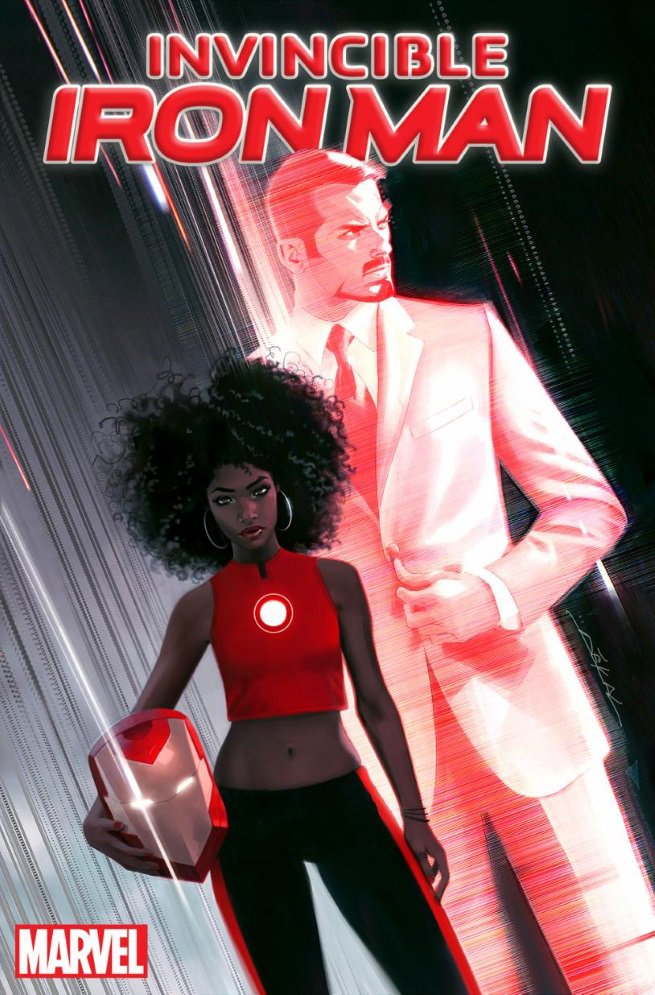
Today, Marvel and writer Brian Bendis broke the news via Time Magazine that at the end of the currently-running event “Civil War II” the mantle of Iron Man will be taken over by a 15-year old black MIT student named Riri Williams

(This IIM - 2016 - promois a major shocker, because the vast majority of fans assumed Riri’s introduction in the pages of Invincible Iron Man (visit the guide) – where she was reverse-engineering Tony Stark’s armor – was a set-up for her to take over the mantle of War Machine. Rhodey has become unavailable to carry that title due to the events of Civil War.)
Riri Williams as Iron Man is a very good thing. We do not have enough female heroes or heroes of color, and to see a that in a character who is both as she takes over the mantle of ostensibly Marvel’s most popular single hero outside of Spider-Man is a huge, visible step not only for Marvel comic readers, but for their film fans who this news will surely reach. To have Williams also be a female super-scientist when Marvel generally boasts only a handful is even more wonderful.

(The most prominent female geniuses of Marvel are Kitty Pryde, who is frequently shown to be nearly as genius as Beast; Valeria Richards, whose preternatural intelligence is partially attributed to super powers; the new Moon Girl; and Mockingbird, an oft-forgotten PhD) .

So Riri Williams as Iron Man is a good thing, right?

On the face of it, yes. Inclusion means representation. I love reading books about heroes that are women, and so does my daughter – also a girl of color.

However, there are some aspects of this character choice that have given some fans and critics pause, which I’d like to discuss here – three in particular. I’m very interested in your input. (Edited to add: Here is a post with similar critique from black writer Son of Baldwin, Here is another from black female nerd BlerdGurl.)

1. Minority legacy heroes are only useful until the original makes their return; then their marginalization can be worse than the average minority hero.

“Legacy Heroes” is a term applied to heroes that are the replacement or junior version to their original heroes. They are sometimes used by creators as an opportunity to change the gender or race of the character bearing the main mantle.. The easiest examples to give are from DC comics (Superboy, Batgirl, Wondergirl, etc), because Marvel simply isn’t known for this practice outside the past few years.

Let’s stick with Marvel, for the moment. For a brief time in the 1980s, Tony Stark could not serve as Iron Man and Rhodey Rhodes took over the title. Rhodey is the best possible example of a Legacy Hero – he was a dynamic, well-developed character long before he became Iron Man, and that means that he was able to continue to be featured even when Tony Stark returned.

Ms-Marvel - 2014 - 0004As War Machine, he’s lead his own title on many occasions (though they are usually short-lived) and he’s and been a significant character in both comics and now films (though he’s frequently sacrificed as a narrative reason to make Stark feel bad, as has happened twice this year alone).
His time as a Legacy Hero made him more visible, but after being Iron Man he didn’t stay an A-level hero. The white guy bumped him.

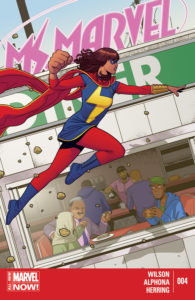
Another terrific example is the relatively new Ms. Marvel, the Pakastani-American Kamala Khan (visit the guide). Kamala is a wonderful analog to the original Spider-Man as a new, unsure hero, and Carol Danvers is very unlikely to ever retake her “Ms.” hero mantle now that she is officially Captain Marvel.

Her books sell ridiculous amounts of copies and have been nominated for Eisners. She’s now an Avenger. Things are going well … but we’re only in year two.

There are examples that don’t go as well. At the end of the comics version of the original Civil War, Captain America appears to die, and Bucky takes over the mantle as Cap (visit the guide). His days as Cap are amazing – great, layered storytelling. When Cap came back they shared the mantle for a while before Bucky was spun back to being Winter Soldier, at which point he began to sink back into obscurity – and he’s a white guy who stars in movies.

As with War Machine, he’s now a character Marvel needs to periodically kickstart into a new title or team only to watch him sink again.

Despite those concerns, check out the amazing list of Legacy Heroes Marvel is currently fielding: [Read more…] about Marvel introduced a black female Iron Man – is that a good thing? (Yes.)

Filed Under: comic books, critique, essays Tagged With: Ant-Man, Brian Bendis, Captain Marvel, diversity, Hulk, inclusion, Iron Man, Kitty Pryde, Miles Morales, Moon Girl, Ms. Marvel, Representation, Riri Williams, Spider-Man, The Falcon, Thor, Tony Stark, Wasp, Winter Soldier, Wolverine

From The Beginning: David Bowie – The Man Who Sold The World (1970-71)

January 26, 2016 by krisis

Essentials of the Era
“Unwashed and Somewhat Slightly Dazed” – BBC
“Width of a Circle”
“All The Madmen”
“The Man Who Sold The World”
“The Supermen“

Starting in 1970, David Bowie locked into an album-a-year rhythm he would maintain for nearly the entire decade as he left behind his more folk-influenced sound on Space Oddity and prepped material for The Man Who Sold The World. With this increased pace come necessarily briefer album cycles – Bowie would be on to the next era of material even before the final singles from this LP were released.

The Man Who Sold The World frequently gets lost between retrospective adoration for “Space Oddity” (not so big of a success at the time) and the three-album glam hits-capade that began with “Changes” from Hunky Dory. This marooned album had no terrific singles of its own. Nirvana did more to promote “Man Who Sold” as a song than Bowie did in the period. The period also occupies a peculiar sonic territory, with Bowie’s pre-Spiders band more interested in sounding heavy than glamrous despite Mick Ronson’s membership in both lineups.

The result is that most latter-day Bowie fans don’t know the music from this era especially well. That makes a deep dive into it all the more interesting … and challenging! This took me over a week to digest despite already having a familiarity with the LP.

bowie-1970Before The Man Who Sold The World

This era begins during the last: Bowie made his first appearance with The Man Who Sold band on the BBC on February 5, 1970, as he was still promoting singles from his second self-titled album.

This appearance was a full-length concert, though only about half those tracks are readily available today. Opener “Amsterdam” by Jacques Brel would later be recored on Pin Ups. Here, Bowie attacks it with verve, first singing in a fine theatrical baritone, but gradually growing more frenzied along with the acoustic guitar that drives the track. It’s not as though any of us are at risk of forgetting Bowie was a theatrical nerd (especially with his many alter-egos looming ahead) but it’s fun to think about how surprising this performance may have been to fans of the day. The host certainly seems a bit shocked by it.

“God Knows I’m Good” is less Dylanesque here than on Space Oddity, but its refrain is less indelible. The next sequence is lost – “Buzz The Fuzz,” “Karma Man,” “London Bye Ta Ta” and “An Occasional Dream.” We pick back up with the first of The Man Who tracks, “The Width Of A Circle.” This is a fascinating early glimpse into the track, which would grow to be impenetrable on the album. Stripped to its acoustic trappings it’s much more driving, but Bowie isn’t quite up to the howling vocal here. He warbles and cracks on the higher notes.

We then skip “Janine” and “Wild Eyed Boy From Freecloud” for a vicious version of “Unwashed And Somewhat Slightly Dazed.” Here, the lower-fi sound of the radio session focuses the track’s fury beneath Bowie’s practiced vocal. Unfortunately, there’s no remaster of “Fill Your Heart” or “The Prettiest Star” – both would be fascinating. We do get a sprawling, eight-minute version of “Cygnet Committee” that’s perhaps a bit slighter than the album cut. Bowie’s highs are not as a clear, and his lows not as resonant. Finally, the show ends with “Memory of a Free Festival,” here just prior to its release as a single. However, this is more like the LP version than the fascinating single mix, with unadorned organ until the “sun machine refrain.” (A final take on “Waiting For The Man” is not collected.)

On the whole this session is unremarkable. Bowie is not in his finest voice, and “Unwashed and Somewhat Slightly Dazed” is the only song strong enough to leave a lasting impression. Indeed, it is the band unleashed on “Unwashed” that seems to best presage the heft of the impending LP despite being still months out from its recording.

The band would return a little over a month later, already fused into a more metal stomp. They show it off on a pulsing version of “Waiting For The Man” with nothing of Lou Reed’s strut (which gets a little weary by the close). Mick Ronson, in particular, is in strong form. “Width of a Circle” has grown hugely in the intervening month. Bowie’s vocal is massive and confident, and Visconti and Woodmansey are beginning to lock into the riffing and fills that would appear on the LP without overdoing them. The song had yet to grow its epic tale of gods and demons (more on that below), so this isn’t really a definitive take on it. A plain electric guitar version of “Wild Eyed Boy From Freecloud” feels out of place even after the band kicks in after the “really you and really me” refrain.

The Man Who Sold The World – Released November 4, 1970

The original UK cover.

The original UK cover.

This might be a weird statement to make about a David Bowie record, but I find it hard to enjoy The Man Who Sold The World because so much of it feels insincere.

When is David Bowie ever really being sincere? He’s not known for his confessional lyrics, that’s for sure. Yet, I would propose there is an inherent honesty and weight in how he portrays many of his fantastic characters with real emotion. They matter to him, so they matter to us. Here, Bowie’s narrative creations feel like nothing more than window dressing to a squalling live band of Mick Ronson, Tony Visconti, and Mick Woodmansey, with Ralph Mace on synthesizers. [Read more…] about From The Beginning: David Bowie – The Man Who Sold The World (1970-71)

Filed Under: essays, reviews Tagged With: bowie

  • « Go to Previous Page
  • Page 1
  • Page 2
  • Page 3
  • Page 4
  • Page 5
  • Page 6
  • Interim pages omitted …
  • Page 19
  • Go to Next Page »

Primary Sidebar


Support Crushing Krisis on Patreon
Support CK
on Patreon


Follow me on BlueSky Follow me on Twitter Contact me Watch me on Youtube Subscribe to the CK RSS Feed

About CK

About Crushing Krisis
About My Music
About Your Author
Blog Archive
Comics Blogs Only
Contact Krisis
Terms & Conditions

Crushing Comics

Marvel Comics

Marvel Events Guide

Spider-Man Guide

DC Comics

  • Crushing Comics Live Aftershow 2027 Marvel Omnibus Fantasy Draft PicksPatrons-Only: Crushing Comics Club Aftershow – Post-Fantasy Draft Hangout and Q&A
    It’s time for another hour of Krisis uncut, […]
  • Crushing Comics Live 2027 Marvel Omnibus Fantasy Draft PicksMarvel Omnibus Fantasy Draft 2027 – Predicting Next Year’s Marvel Omnis (& you can too!)
    I’m back with an absolutely massive new […]
  • Patrons-Only: Crushing Comics Club Aftershow for Ranking Every X-Men Omnibus
    We’re trying something new! Yesterday after my […]
  • Crushing Comics Live - Ranking Every X-Men OmnibusRanking Every X-Men Omnibus, Ever
    Today, I woke up and chose violence… violence […]
  • Haul Around The World: 2026 So Far in Omnis, Epics, DC Finest, and more!
    It’s Sunday, and that means it’s time for […]
  • My Ballot for the 14th Annual Tigereyes Most-Wanted Marvel Omnibus Poll - Avengers (2023) #34-36 connecting coversMy Most-Wanted Marvel Omnibus List, 2026 Edition
    Want to know my Top 60 Most-Wanted Marvel omnibuses of 2026? You might be surprised by how much of it is NOT X-Men... […]
  • Krisis Selfie for the Tigereyes 14th Annual Marvel Most Wanted Omnibus poll launchit’s weird to be seen
    I am a micro micro-influencer with a tiny amount of name and face recognition. But, it's still recognition, and it can be deeply weird. […]
  • Not Dead (yet!)
    It is Krisis, fresh from several months of real-life […]
  • Tigereyes Most Wanted Marvel Omnibus 2025 Marvels Anthology Omnibus MappingMarvel Anthology, Creator-Centric, & Magazine Omnibus Mapping | 14th Annual Tigereyes Most-Wanted Marvel Omnibus Poll
    Marvel Magazine & Anthology omnibus mapping for books that don't yet exist - all options on the Tigereyes Most Wanted Marvel Omnibus 14th Annual Secret Ballot […]
  • Tigereyes Most Wanted Marvel Omnibus 2025 Alf Marvel License Omnibus MappingMarvel Licensed Properties Omnibus Mapping | 14th Annual Tigereyes Most-Wanted Marvel Omnibus Poll
    Marvel's License Omnibus mapping for non-Marvel IP books that don't exist - all options on the Tigereyes Most Wanted Marvel Omnibus 14th Annual Secret Ballot […]
  • Tigereyes Most Wanted Marvel Omnibus 2026 - Marvel Alternate Realities and What If Omnibus Mapping - What If?: Fantastic Four (2005) #1What If & Marvel Multiverse Omnibus Mapping | 14th Annual Tigereyes Most-Wanted Marvel Omnibus Poll
    Marvel What If? and Alternate Reality omnibus mapping for books that don't yet exist - all options on the Tigereyes Most Wanted Marvel Omnibus 14th Annual Secret Ballot […]
  • Tigereyes Most Wanted Marvel Omnibus 2026 - Malibu Omnibus Mapping - Rune (1994) #7Malibu Ultraverse Omnibus Mapping | 14th Annual Tigereyes Most-Wanted Marvel Omnibus Poll
    Malibu Ultraverse omnibus mapping for books that don't yet exist - all options on the Tigereyes Most Wanted Marvel Omnibus 13th Annual Secret Ballot […]
  • Tigereyes Most Wanted Marvel Omnibus 2026 - CrossGen Omnibus Mapping - Sojourn (2001) #6CrossGen Omnibus Mapping | 14th Annual Tigereyes Most-Wanted Marvel Omnibus Poll
    CrossGen omnibus mapping for books that don't yet exist - all options on the Tigereyes Most Wanted Marvel Omnibus 14th Annual Secret Ballot […]
  • Tigereyes Most Wanted Marvel Omnibus 2026 - FOX and Indiana Jones Omnibus Mapping - The Further Adventures of Indiana Jones (1983) #1Indiana Jones & 20th Century Fox Omnibus Mapping | 14th Annual Tigereyes Most-Wanted Marvel Omnibus Poll
    Indiana Jones & 20th Century FOX omnibus mapping for books that don't yet exist - all options on the Tigereyes Most Wanted Marvel Omnibus 14th Annual Secret Ballot […]

Content Copyright ©2000-2023 Krisis Productions

Crushing Krisis participates in affiliate programs including (but not limited to): Amazon Services LLC Associates Program (in the US, UK, Canada, France, Germany, Italy, and Spain), eBay Partner Network, and iTunes Affiliate Program. If you make a qualifying purchase through an affiliate link I may receive a commission.