• Skip to primary navigation
  • Skip to main content
  • Skip to primary sidebar

Crushing Krisis

Comic Books, Drag Race, & Life in New Zealand

  • DC Guides
    • DC Events
    • DC New 52
    • DC Rebirth
    • Batman Guide
    • The Sandman Universe
  • Marvel Guides
    • Marvel Events
    • Captain America Guide
    • Iron Man Guide
    • Spider-Man Guide (1963-2018)
    • Spider-Man Guide (2018-Present)
    • Thor Guide
    • X-Men Reading Order
  • Indie & Licensed Comics
    • Spawn
    • Star Wars Guide
      • Expanded Universe Comics (2015 – present)
      • Legends Comics (1977 – 2014)
    • Valiant Guides
  • Drag
    • Canada’s Drag Race
    • Drag Race Belgique
    • Drag Race Down Under
    • Drag Race Sverige (Sweden)
    • Drag Race France
    • Drag Race Philippines
    • Dragula
    • RuPaul’s Drag Race
    • RuPaul’s Drag Race All Stars
  • Contact!

Neil Gaiman

New for Patrons: The Definitive Guides to The Sandman Universe

October 30, 2018 by krisis

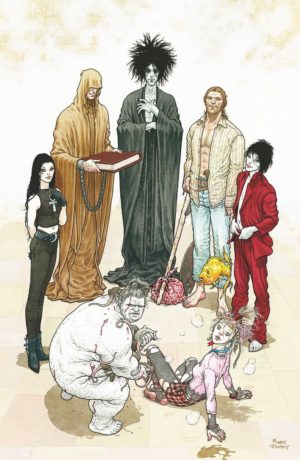
Today’s new guide Patrons of Crushing Krisis is actually three guides (or maybe four, by the time you read this), which seems like overkill for what is essentially a single title with an obvious ten-volume paperback line. But, it’s really so much more than that…

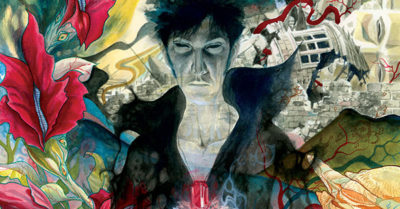
Sandman Universe – The Definitive Reading Order and Collecting Guide
+

Books of Magic – The Definitive Reading Order and Collecting Guide

+

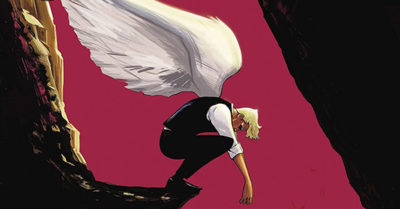
Lucifer – The Definitive Reading Order and Collecting Guide
I am fascinated by how Neil Gaiman’s The Sandman (and, in fact, all of the extended Sandman Universe) bridges the gap between comic books and serious literature.

That fascination has lasted for over 25 years – almost as long as Gaiman’s reinvention of the Golden Age character has existed.

Even the most-knowledgable comic fan could be forgiven for not knowing that Morpheus the King of Dreams was merely an iteration on an already-rebooted Golden Age DC hero. The original Sandman, Wesley Dodds, was a minor character who ran for seven years in the Golden Age and then popped back up twenty years later in the Earth 2 Justice Society of America in the Silver Age.

Without Gaiman and Morpheus, Dodds would probably be that one JSA member whose name you could never recall. His Silver Age iteration certainly wouldn’t jog your memory – a Kirby/Simon creation meant to be Mr. Sandman who lasted just six issues and who was later retconned in Wonder Woman to be a professor lost in the world of dreams.

There was no harm in Neil Gaiman revamping such a character to a more adult version early in the Post-Crisis years in 1989. At the time, Gaiman was still a relative unknown, coming off of the slept-on Black Orchid mini-series – a similar act of excavation and reinvention. He was so used to tepid reception to his early work that he expected Sandman to run just eight issues, which is why the first eight form such a satisfying arc despite being a mix of one-shots and continuing stories. He though that would be the whole series!

Instead, The Sandman became the springboard off of which Gaiman launched his multimedia fame in a miraculous three-year run from 1990-93 that saw him release Books of Magic at DC, the novel Good Omens (with Terry Prachett), win a World Fantasy Award in a category where Sandman wasn’t even eligible, essentially give birth to what we know as the modern American graphic novel market with the first two Sandman trade paperbacks, and top it off with the landmark Death: The High Cost of Living (the collection of which would be introduced by his friend and frequent name-checker, Tori Amos). [Read more…] about New for Patrons: The Definitive Guides to The Sandman Universe


Filed Under: comic books Tagged With: Books of Magic, DC Comics, Death, Lucifer, Mike Carey, Neil Gaiman, Peter Gross, Sandman, Sandman Universe, Vertigo

The Sandman Universe – The Definitive Collecting Guide and Reading Order

The Sandman and The Dreaming comic books definitive issue-by-issue collecting guide and trade reading order for omnibus, hardcover, and trade paperback collections. Find every issue and appearance! Part of Crushing Krisis’s Crushing Comics. Last updated June 2024 with titles scheduled for release through September 2024.

Want to get straight to reading Neil Gaiman’s legendary 75-issue Sandman series? It’s one of the most comprehensively collected runs of the past 40 years of comics, and you have plenty of format options – all explained in full below!

  • Absolute Editions
  • Omnibus Editions
  • Deluxe Hardcover Editions
  • Paperback Re-Collections
  • The original 10 Hardcover & Paperback Editions by story arc
  • Annotated Editions (and other academically-oriented collections)

Read on for a history not only of Gaiman’s Sandman, but all of DC’s many Sandmen as well as the entire universe of comics that sprung from Gaiman’s work.

The Sandman is both a somewhat obscure Golden Age hero revived by the Justice Society for modern audiences and one of the most widely-read characters in the history of American comics.

They are not the same character.

The Golden Age Sandman was Wesley Dodds. Dodds was an odd early take on superheroism, dressing in a sharp green three-piece suit and subduing foes with a gun that fired gas that could compel them to tell the truth or put them to sleep.

Dodds was one of many Golden Age Justice Society characters to stay constrained to DC’s vintage Earth 2 with no Silver Age (AKA Earth 1) counterpart – although Jack Kirby and Joe Simon did briefly reinvent The Sandman in 1974 with a new character, Garrett Sanford.

In the wake of Crisis on Infinite Earths, DC could have easily reinvented either Dodds or Sanford for their new clean slate of continuity. Instead, they handed the character to a barely-known British journalist: Neil Gaiman.

Gaiman had very little work to his name at that point, including the Mostly Harmless biography of Douglas Adams and a handful of issues of 2000 AD. However, he had successfully pitched DC on a three-issue series called Black Orchid in 1988. The series didn’t sell much, but it was well-liked by editor Karen Berger. It was on the heels of that mild success that he pitched his re-imagination of Sandman.

In fact, Gaiman originally intended to reference the 1970s Sandman in Black Orchid, and so his initial Sandman pitch was for that version of the character. Berger, Vertigo’s founding editor, asked him to re-pitch Sandman as a new character. In response Gaiman devised Morpheus, one of the seven eternal Endless – immutable forces of the natural world.

They rest, as they say, is history.

Sandman wasn’t an immediate pop culture force, but it caught on quickly. The first issue was popular, and sales began to climb with issue #5 and never looked back. Morpheus appeared in the other proto-Vertigo titles in Swamp Thing #84 and Hellblazer #19. Later, Gaiman began to incorporate the history of the Golden and Bronze age Sandmen into his story.

The title achieved its cultural impact by degrees over the course of the next three years until The Sandman (and Neil Gaiman, along with it) reached a tipping point and broke through into the consciousness of the wider public.

In 1990, Gaiman penned The Books of Magic mini-series for Vertigo. This self-contained low fantasy story, to which Harry Potter bears a more-than-striking similarity, proved to be a massive hit that spawned its own franchise of titles (visit the guide). Shortly before that, Gaiman and Terry Prachett released the novel Good Omens. Prachett was much more famous than the neophyte Gaiman (it was his first novel), and the book was popular.

Books garnered critical attention and Omens nabbed some significant fantasy award nominations in 1991. Perhaps uncoincidentally, so did Sandman. Issue #19, a loose adaption of A Midsummer Night’s Dream, won the World Fantasy Award in 1991 for “Best Short Fiction” (after which comics were outlawed from winning in that category).

Also in 1990, DC published the Sandman trade paperback – A Doll’s House – which originally collected issues #8 (Death’s debut) through #16. It was a massive success, and DC followed it with Preludes and Nocturnes in 1991 just as Sandman won the World Fantasy Award.

The trade paperbacks were available in traditional bookstores, where the series was discovered by audiences that the comic alone would never be able to reach. This, along with Watchmen and several of DC’s famous Batman graphic novels, were effectively the origin story of the modern American trade paperback format.

Finally, in the first week of 1992, Tori Amos’s Little Earthquakes was released. Its track “Tear In Your Hand” saying, “If you need me, me and Neil’ll be hanging out with The Dream King.”

Amos’s music garnered a cult following with literary-minded freaks and geeks on the fringes of grunge culture. As her audience devoured the dense mythology of her confessional and sometimes-fantastical lyrics, they stumbled upon Gaiman’s Sandman – as well as his pair of Death mini-series in the early 90s. Amos penned the introduction to the collection of The High Cost of Living. This brought even more fans from outside of the worlds of comics and fantasy to Gaiman’s work.

From that point forward, The Sandman was an unstoppable juggernaut of critical praise and sales … right up until Gaiman stopped it, in March of 1996 with issue #75. It ended while still outselling most of the DC line, including comics from Batman and Superman.

Gaiman had long seeded his narrative with hints of Morpheus’s end, though that didn’t necessarily mean that Sandman itself would end along with him. The end of Sandman lead to a trio of spinoffs – a second Death mini series (The Time of Your Life), a mini-series for Destiny (A Chronicle of Deaths Foretold), and the ongoing comic The Dreaming depicting the ongoing life of the dreamworld after Morpheus’s depature.

The Dreaming ran for five years, though it was never a hit on the magnitude Sandman itself. Yet, its endurance allowed for the launch of several mini-series – some under the title “The Sandman Presents.” One of those mini-series starred Gaiman’s version of Lucifer as penned by Mike Carey, which spun into its own franchise with a 75-issue series in 2000 and a later 2016 revival (visit the guide).

While the character of Sandman is wholly-owned by DC, they have always shown Gaiman an extraordinary amount of deference in their use of the universe and its characters (as opposed to, say, their treatment of Alan Moore). DC continued to release titles in this extended Sandman Universe through 2014, always with Gaiman’s consent but rarely with him writing, save for Dream Hunters and Endless Nights. That changed in 2013, when Gaiman returned not only to his Sandman Universe, but to Morpheus himself with The Sandman Overture. Overture was a tale of Morpheus’s journey prior to The Sandman #1 with lush illustrations from JH Williams and Dave Stewart.

After a several years break from any Sandman Universe stories save for Lucifer, Dream made a surprising appearance in the 2017-18 line-wide event Metal as a sort of ephemeral shepherd to Bruce Wayne. While not directly linked to the events of Metal, Dream’s appearance there can be seen as a prelude to the 2018 relaunch of the Sandman Universe as its own self-contained line of Vertigo titles beginning with The Dreaming, House of Whisper, and relaunches of Lucifer and Books of Magic. [Read more…] about The Sandman Universe – The Definitive Collecting Guide and Reading Order

Crushing Comics S01E076 – Absolute Sandman, Vol. 4

February 21, 2018 by krisis

Today I mean to talk about Clue, but wound up sharing a story from my days of digging into eCommerce data at RJMetrics. Then, I open my final Absolute-sized tome, Absolute Sandman Volume 4, and talk about knowing when (and how) to end things.

Want to start from the beginning of this season of videos? Here’s the complete Season 1 playlist of Crushing Comics.

Episode 76 features The Absolute Sandman, Volume 4.

Filed Under: thoughts Tagged With: Absolute editions, Clue, DC Comics, Neil Gaiman, Sandman, Vertigo

From The Beginning: Neil Gaiman’s The Sandman (1989), Issues #5-8

January 30, 2018 by krisis

Tonight’s discussion wraps up the first arc of The Sandman (1989) with issues #5-8, which include three issues of Dream trying to out-maneuver the psychopathic Dr. Destiny to regain control of the Ruby, and the all-time classic introduction of Death.

In this run, Sandman quick delves from suspense in issue #5 down to the depths of horror in issue #6 before widening its scope in issues #7 and 8 – first to the expanse of Dream’s kingdom, and then to the very concept of death and existence.

Read on for my thoughts on each of these issues, or listen to our full discussion above. FanGirl and I have had an amazing time discussing Sandman’s first arc these past few weeks. We’re going to break from Sandman to refocus on Black Panther for the month of February, but we’ll happily return to Sandman if you demand it! [Read more…] about From The Beginning: Neil Gaiman’s The Sandman (1989), Issues #5-8

Filed Under: comic books, reviews Tagged With: DC Comics, Dr. Destiny, From The Beginning, From The Beginning: The Sandman, Mike Dringenberg, Neil Gaiman, Sam Kieth, Sandman, Vertigo

From The Beginning: Neil Gaiman’s The Sandman (1989), Issues #2-4

January 23, 2018 by krisis

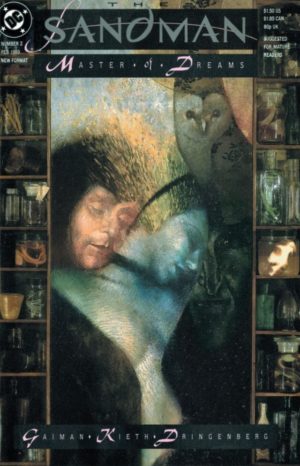
Tonight’s discussion is on The Sandman (1989) issues #2-4, which follow Dream as he returns to his kingdom of dreams and sets out on a quest to rediscover two of his three crucial tools – his pouch of sand and his helm.

What people often forget in talking about Sandman as a modern masterpiece is that it started out as very much a horror comic. It was also not so specifically disconnected from the DC Universe – we peek into Arkham in issue #2, hang out with Constantine in #3, and meet Etrigan in #4.

The Sandman (1989) #2 is Gaiman building a world, and dispensing a lot of information along the way, though some of it we will not recognize until much later. Sandman discovers his Cain and Abel, his librarian, and his decrepit castle – all of his dream time falling apart without him to hold it together.

Dream resolves to regain his three aspects and consults the trio of fates for them in a memorable sequence packed with literary references. His pouch of sand currently resides with Constantine, which he views as easier to acquire than his jewel (with the League) or his helmet (with a demon). Kieth’s art is a bit lumpy here, though the later recolor does it many favors. It’s our first time seeing Morpheus unbound, and he bears an uncanny resemblance to his creator.

The Sandman (1989) #3 is a low point of early Sandman for me – bringing in the caustic John Constantine and showing us Dream through his eyes. It feels much more like a Hellblazer issue than a Sandman issue.

Also, Kieth and Dringenberg’s art here goes a bit sour, just too inconsistent and droopy across a tale told primarily with a specific, human character (though there are some great panels, like the reveal of Constantine’s former lover).

I think it is in The Sandman (1989) #4 that Sandman became a classic. This issue is firmly rooted in Christian mythology, but also features an active, clever Dream increasing in his powers. It’s also quite boldly drawn by Kieth and Dridenberg, with the notable trio of demons – Beezlebub, a human with a fly’s head, Azazeal, a sort of Beholder, and Lucifer Morningstar, who is apparently a Space Oddity eta David Bowie.

Dream’s journey to the underworld is dire with a dash of humor beneath as Etrigan takes him through the suicide grove and past his own lost love, and later as Sandman engages in the most famous sort of wizard’s duel, that we all know from Sword In the Stone.

Filed Under: comic books, reviews Tagged With: bowie, Crushing Comics, From The Beginning, From The Beginning: The Sandman, Neil Gaiman, Sandman

  • « Go to Previous Page
  • Page 1
  • Page 2
  • Page 3
  • Page 4
  • Page 5
  • Go to Next Page »

Primary Sidebar


Support Crushing Krisis on Patreon
Support CK
on Patreon


Follow me on BlueSky Follow me on Twitter Contact me Watch me on Youtube Subscribe to the CK RSS Feed

About CK

About Crushing Krisis
About My Music
About Your Author
Blog Archive
Comics Blogs Only
Contact Krisis
Terms & Conditions

Crushing Comics

Marvel Comics

Marvel Events Guide

Spider-Man Guide

DC Comics

  • hold one moment, please!
    Folks, all CK content and updates are on pause while I […]
  • Crushing Comics Live Aftershow 2027 Marvel Omnibus Fantasy Draft PicksPatrons-Only: Crushing Comics Club Aftershow – Post-Fantasy Draft Hangout and Q&A
    It’s time for another hour of Krisis uncut, […]
  • Crushing Comics Live 2027 Marvel Omnibus Fantasy Draft PicksMarvel Omnibus Fantasy Draft 2027 – Predicting Next Year’s Marvel Omnis (& you can too!)
    I’m back with an absolutely massive new […]
  • Patrons-Only: Crushing Comics Club Aftershow for Ranking Every X-Men Omnibus
    We’re trying something new! Yesterday after my […]
  • Crushing Comics Live - Ranking Every X-Men OmnibusRanking Every X-Men Omnibus, Ever
    Today, I woke up and chose violence… violence […]
  • Haul Around The World: 2026 So Far in Omnis, Epics, DC Finest, and more!
    It’s Sunday, and that means it’s time for […]
  • My Ballot for the 14th Annual Tigereyes Most-Wanted Marvel Omnibus Poll - Avengers (2023) #34-36 connecting coversMy Most-Wanted Marvel Omnibus List, 2026 Edition
    Want to know my Top 60 Most-Wanted Marvel omnibuses of 2026? You might be surprised by how much of it is NOT X-Men... […]
  • Krisis Selfie for the Tigereyes 14th Annual Marvel Most Wanted Omnibus poll launchit’s weird to be seen
    I am a micro micro-influencer with a tiny amount of name and face recognition. But, it's still recognition, and it can be deeply weird. […]
  • Not Dead (yet!)
    It is Krisis, fresh from several months of real-life […]
  • Tigereyes Most Wanted Marvel Omnibus 2025 Marvels Anthology Omnibus MappingMarvel Anthology, Creator-Centric, & Magazine Omnibus Mapping | 14th Annual Tigereyes Most-Wanted Marvel Omnibus Poll
    Marvel Magazine & Anthology omnibus mapping for books that don't yet exist - all options on the Tigereyes Most Wanted Marvel Omnibus 14th Annual Secret Ballot […]
  • Tigereyes Most Wanted Marvel Omnibus 2025 Alf Marvel License Omnibus MappingMarvel Licensed Properties Omnibus Mapping | 14th Annual Tigereyes Most-Wanted Marvel Omnibus Poll
    Marvel's License Omnibus mapping for non-Marvel IP books that don't exist - all options on the Tigereyes Most Wanted Marvel Omnibus 14th Annual Secret Ballot […]
  • Tigereyes Most Wanted Marvel Omnibus 2026 - Marvel Alternate Realities and What If Omnibus Mapping - What If?: Fantastic Four (2005) #1What If & Marvel Multiverse Omnibus Mapping | 14th Annual Tigereyes Most-Wanted Marvel Omnibus Poll
    Marvel What If? and Alternate Reality omnibus mapping for books that don't yet exist - all options on the Tigereyes Most Wanted Marvel Omnibus 14th Annual Secret Ballot […]
  • Tigereyes Most Wanted Marvel Omnibus 2026 - Malibu Omnibus Mapping - Rune (1994) #7Malibu Ultraverse Omnibus Mapping | 14th Annual Tigereyes Most-Wanted Marvel Omnibus Poll
    Malibu Ultraverse omnibus mapping for books that don't yet exist - all options on the Tigereyes Most Wanted Marvel Omnibus 13th Annual Secret Ballot […]
  • Tigereyes Most Wanted Marvel Omnibus 2026 - CrossGen Omnibus Mapping - Sojourn (2001) #6CrossGen Omnibus Mapping | 14th Annual Tigereyes Most-Wanted Marvel Omnibus Poll
    CrossGen omnibus mapping for books that don't yet exist - all options on the Tigereyes Most Wanted Marvel Omnibus 14th Annual Secret Ballot […]

Content Copyright ©2000-2023 Krisis Productions

Crushing Krisis participates in affiliate programs including (but not limited to): Amazon Services LLC Associates Program (in the US, UK, Canada, France, Germany, Italy, and Spain), eBay Partner Network, and iTunes Affiliate Program. If you make a qualifying purchase through an affiliate link I may receive a commission.