[Patreon-Nov16-Post-Bug][/Patreon-Nov16-Post-Bug]This month of reading WildStorm from the beginning has frequently defied my expectations, with my enjoyment of the contents nearly reversed from what I expected.
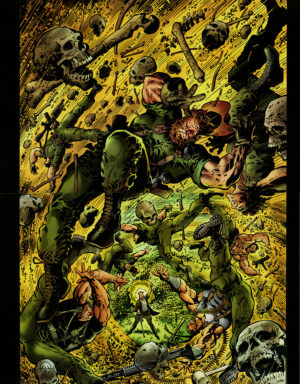 Team 7: Objective hell tops that list of unexpected outcomes. It’s a riveting, gorgeous, well-written book that merges military themes with superhero powers. There are a few tiny nods to the future of these characters, particularly for Slayton/Backlash, but otherwise this series hardly acknowledges the wider WildStorm Universe and the future it holds in store.
Chuck Dixon shines here even more than on the original limited series. Past needing to introduce his massive cast and take them through multiple missions, this series has both more action and better character moments. No one gets the sort of monologue or grandstanding they did in the first series. It’s all tiny beats that tell us more about the team – particularly Slayton’s temper and the babyfaced Cash’s rise to leadership before an eventual fall from their graces.
Every page of this book looks damned great. The covers truly don’t do justice to the interior pages.
Chris Warner spares no detail in illustrating the jungle environs of Nicaragua and Cambodia. A gang of multiple inkers introduce some variation but fill every page with plenty of contrast for colorist Monica Bennett to make pop with rich greens, golden flesh tones, and Team 7’s red war paint.
The long-haired, well-muscled men of Team 7 have a certain mercurial hint of motion that’s reminiscent of issue #1’s cover artist, the legendary Barry Windsor Smith. The members who we don’t know in the present day stand out the most, with Caitlin Fairchild’s father clearly modeled on Iggy Pop and Grunge’s father Chang drawn more distinctly as an Asian than on the prior outing.
The inspiration for this story seems near to that of The Divine, an OGN I reviewed last year. The difference is that while The Divine was about child soldiers in an eternal war, O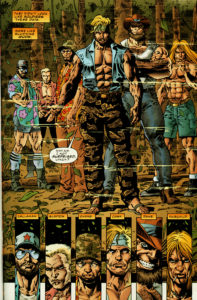 bjective Hell is about a small bubble of peace that Team 7 is forced to disrupt for the greater good.
Was a greater good achieved? There’s no question that removing low-yield nukes from the grasping Khmer Rouge is a positive, but the open psychic warfare between US and Russian forces signaled a new front of the Cold War that Team 7 found themselves alone to defend. While they escape with only one serious casualty this time, it helps to frame their later choice to splinter and become mercenaries. As long as the specter of their reassembling as a team exists in the world, the US Government will find some threat that demands their intervention … but does their existence also escalate the seriousness of the threats?
Team 7: Objective Hell doesn’t hold those answers or very many keys to the big questions we’ve been asking about Backlash, Grifter, Dane, Lynch, and Cray, but it is a superior WildStorm offering that makes me wish we had an ongoing comic to add more past missions to Team 7’s published history.
Want a recap? Keep reading for a summary of how these soldiers became super. Here’s the schedule for the rest of this month’s WildStorm re-read. Tomorrow is the main event! WildStorm Rising! Let’s get ready to cross over, baby!
Need the issues? This series has not been collected, so you’ll need to grab the singles – try eBay or Amazon. Since further series hit these same issue numbers, be sure to match your purchase to the cover images in this post. [Read more…] about From The Beginning: WildStorm Universe – Team 7: Objective: Hell (1995) #1-3
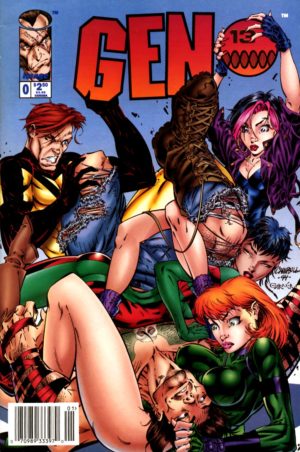 The series would go on to be WildStorm’s longest-running book, and it debuted in memorable fashion with thirteen variant covers, which might not sound impressive today in the world of 50-states covers from both Marvel and DC but at the time was unheard of. (
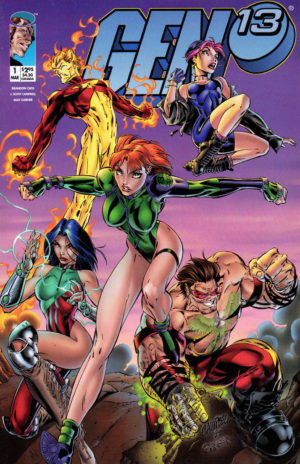 Fairchild was intentionally the most generic character in the original series – a bookworm turned she-hulk – but fans responded more to the other four characters, each a familiar archetype. To force the young team’s new life to be seen exclusively through the eyes of Caitlin the all-night studier would stunt the growth of the book and the cast.
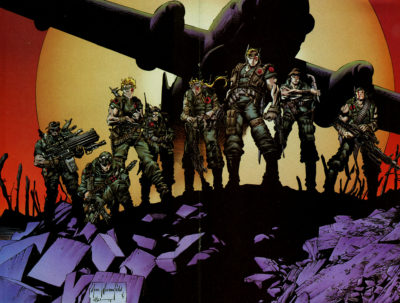 The original Team 7 operated in the 70s consisted of this list of eleven largely familiar names: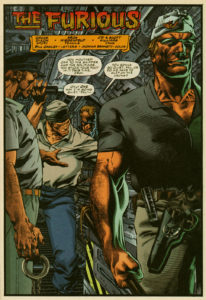
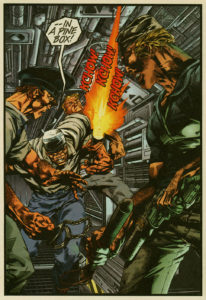
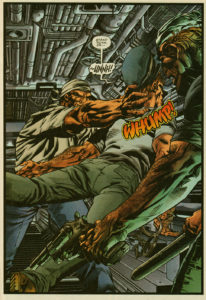
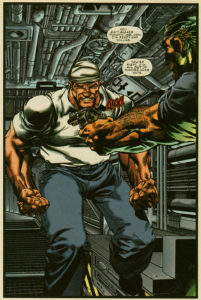
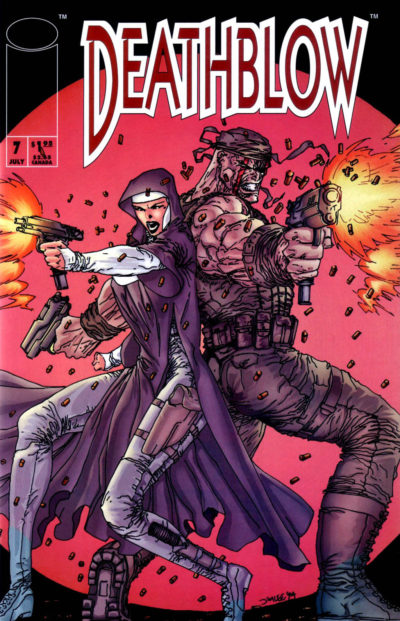 Deathblow is different than all of the other WildStorm books. It’s not just the desaturated colors or the religious overtones, but the small cast combined with sense that the plot is paramount. It feels as though the story might keep heaving onward even if Deathblow decided not to show up. At points in this arc it feels like he’s an anchor dragging behind the good versus evil aspects of the story, until the final pages of issue #9 manage to reel him in.
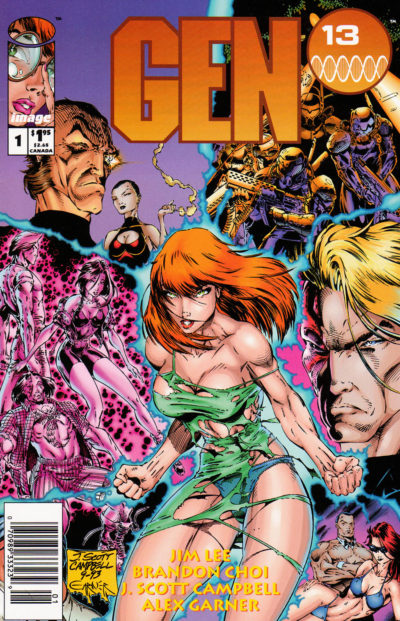 The cast of Gen13 were some of Jim Lee’s final creations in the early years of WildStorm. In an interview in Gen13 #1/2, he discusses being motivated to move away from the gear-laden extreme look (and the violence that accompanies it) that many classic characters at Marvel and DC were moving towards. (The irony of the entire team wielding guns on the cover from Lee is not lost on me). He also intentionally created Caitlin Fairchild as a literal strong female who was also super-smart – an obvious choice to lead the team.
 It’s not just the Gen13 kids who make this story interesting, but I.O director John Lynch finally being fleshed out into a dynamic character instead of just a conniving government villain. If you’ve read any WildStorm up to this point, he hasn’t exactly been a sympathetic character (except for maybe in WildCATs #2 when he doesn’t arrest the team). That’s especially true coming from reading Kindred, where he seemed as hugely unsympathetic as ever!